

Knee Replacement in Faridabad
Knee replacement surgery replaces a damaged knee joint with an implant. It is usually considered when arthritis or injury causes pain and stiffness that no longer responds to medication and physiotherapy.
- Orthopaedics
- 5-step procedure
At a glance
- Department
- Orthopaedics
- Hospital
- Goga Ji Hospital
- Location
- Jawahar Colony, Near Disposal Chowk, Faridabad
- Appointments
- +91-9266088551
This page explains what the procedure involves, who it suits, what recovery typically looks like and what the risks are, so you arrive at your appointment already informed rather than deciding on the spot.
What is knee replacement?
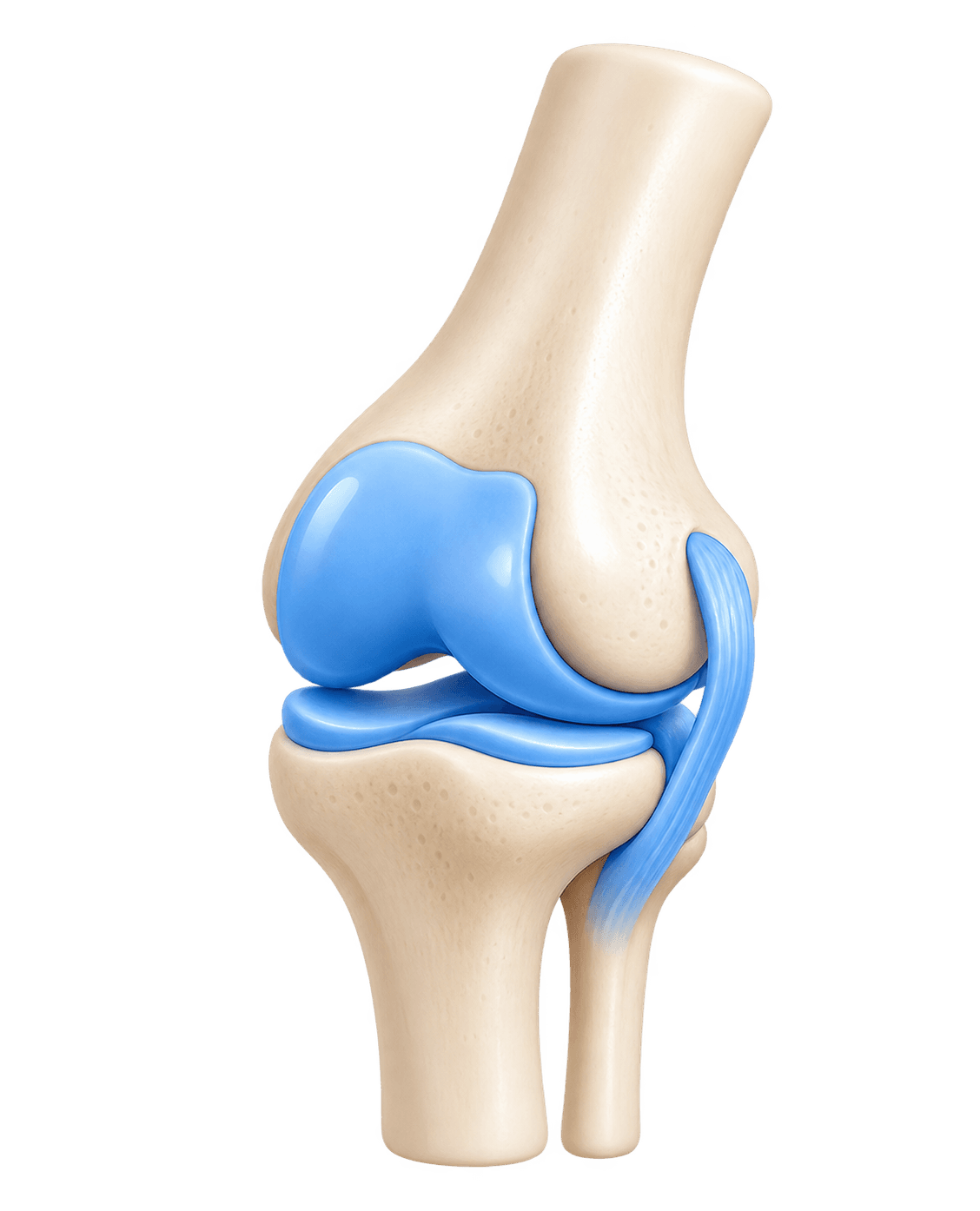
Knee replacement surgery removes the worn surfaces of a damaged knee joint and replaces them with an implant made of metal and medical-grade plastic. The point is not a new knee so much as a knee that no longer hurts to use.
It is usually done for advanced arthritis, where the cartilage cushioning the joint has worn away and bone is rubbing on bone. It is a well-established operation, and for the right patient it is one of the more reliably life-changing procedures in surgery — but it is major surgery, and the decision to have it should be yours rather than something you feel pushed into.
Who needs it
Surgery is considered when arthritis is limiting your life and the simpler measures have stopped working. Wear on an X-ray on its own is not a reason to operate.
- Knee pain that disturbs your sleep or persists at rest
- Difficulty walking, climbing stairs, or standing up from a chair
- Pain that no longer responds to medication, physiotherapy or injections
- Significant stiffness or a knee that has become bowed or knock-kneed
- A knee that limits work, prayer, or getting around your own home
- X-ray changes of advanced arthritis that match your symptoms
Types
Not everyone needs the whole joint replaced. Which operation suits you depends on how much of the knee is affected.
Total knee replacement
All the worn surfaces of the joint are replaced. This is the most common option, used when arthritis affects the whole knee.
Partial (unicompartmental) knee replacement
Only the damaged part of the knee is replaced, preserving the rest. Suitable for a smaller group of patients where arthritis is confined to one compartment.
Revision knee replacement
Replacing an implant that has worn, loosened or become infected years after the original surgery.
How the procedure works
The operation usually takes one to two hours. You will not be awake for it, and the anaesthetist will discuss with you beforehand whether that means a spinal or a general anaesthetic.
- 1
Anaesthesia
Either a spinal anaesthetic, numbing you from the waist down, or a general anaesthetic. Both are routine for this operation and the choice is discussed with you.
- 2
Accessing the joint
An incision is made at the front of the knee and the joint is opened to expose the worn surfaces.
- 3
Preparing the bone
The damaged cartilage and a thin layer of bone are removed from the end of the thigh bone and the top of the shin bone, and shaped to fit the implant.
- 4
Fitting the implant
The metal components are fitted to the bone with a plastic spacer between them, taking the place of the cartilage that has worn away.
- 5
Checking movement and closing
The surgeon checks the knee bends, straightens and tracks properly through its range before closing.
Preparing for it
Preparation genuinely affects recovery. The stronger the muscles around your knee going in, the faster you get moving afterwards.
- Pre-operative assessment: blood tests, an ECG and a check that you are fit for anaesthesia
- Tell us every medicine you take, including anything bought without a prescription. Blood thinners and diabetes medicines need specific instructions
- Stop smoking if you can — it measurably affects wound healing and infection risk
- Start the physiotherapy exercises you are given before the operation, not after
- Arrange your home: a firm chair with arms, a raised toilet seat if advised, and clear floor space free of loose rugs
- Arrange someone to be with you for the first week or two at home
- Follow the fasting instructions exactly — eating late is a common reason operations are postponed on the day
Recovery
Recovery is gradual and depends on your age, general health and how the knee was before surgery. These are typical ranges, not promises — your surgeon will give you figures for your own situation.
- 1
Day 1 to 2
You will be helped to stand and walk with a frame or crutches, usually the day after surgery. Getting moving early reduces the risk of clots and stiffness.
- 2
The first week
Most people go home within two to five days. Pain is managed with medication, and physiotherapy focuses on bending and straightening the knee.
- 3
Two to six weeks
Walking distance increases and support is gradually reduced. Physiotherapy continues throughout — this is the period that determines your final range of movement.
- 4
Three months onward
Most people are walking comfortably and back to routine activity. Swelling and some discomfort settling over several more months is normal.
Risks and complications
Knee replacement is a common and well-established operation, but it is major surgery and it carries real risks. These are uncommon rather than rare, and worth understanding before you consent.
- Infection, either in the wound or deeper around the implant, which can require further surgery
- Blood clots in the leg or lung — you will be given measures to reduce this risk
- Stiffness, or a range of movement that is less than hoped for
- Ongoing pain, which a minority of patients experience despite a technically good operation
- Injury to nerves or blood vessels around the knee
- Loosening or wear of the implant over years, which may eventually need revision surgery
- The usual risks of anaesthesia, which the anaesthetist will discuss with you
Ask about your own risk
These are the risks of the procedure in general. Your personal risk depends on your age, other conditions and the specifics of your case — ask your surgeon to put a figure on it for you before you consent.
Rehabilitation
The operation is roughly half of the treatment. The other half is physiotherapy, and it is the part you control.
- Daily exercises to restore bending and straightening, starting in hospital
- Progressive strengthening of the thigh and calf muscles
- Graded walking, increasing distance rather than speed
- Guidance on kneeling, stairs, driving and returning to work
- Review appointments to check progress and adjust the programme
Care at Goga Ji Hospital
Knee replacement at Goga Ji Hospital is carried out by the orthopaedic department in our operation theatres, with imaging and laboratory support on site and intensive care available if closer monitoring is needed after surgery. Physiotherapy is planned before the operation rather than arranged afterwards.
Frequently asked questions
How long does a knee replacement last?
Modern implants commonly last well over a decade, and often considerably longer. How long yours lasts depends on your age, weight, activity level and the type of implant, so treat any single figure with caution — your surgeon can give you a more useful estimate for your circumstances.
Will I be able to sit cross-legged or squat afterwards?
Often not fully, and this matters a great deal for daily life in India — for floor sitting, prayer and using an Indian-style toilet. Discuss it explicitly with your surgeon before the operation, because it should factor into the decision rather than come as a surprise afterwards.
Is the surgery painful?
There is pain afterwards, and it is managed actively with medication and nerve blocks. Most people find it considerably more manageable than they feared, and less than the arthritis pain they had before, but the first week is genuinely uncomfortable and it is better to expect that.
Can I have both knees done at once?
Sometimes, but it is a bigger physiological event and needs you to be fit enough for it. Doing them separately means two recoveries; doing them together means one longer, harder one. Your surgeon will advise which is safer for you.
When can I drive again?
Typically around four to six weeks, but the test is functional, not calendar-based: you must be off strong painkillers and able to perform an emergency stop comfortably. Check your insurance position too.
This page is general health information, not medical advice. It cannot account for your history, medication or test results. Please speak to a qualified doctor about your own symptoms and treatment. If you think you are having a medical emergency, seek immediate help.
Considering knee replacement?
Talk to our orthopaedics team at Goga Ji Hospital, Faridabad, about whether it is the right option for you.