

Kidney Stones: Symptoms, Causes and Treatment
Kidney stones are hard deposits that form in the kidneys. Small stones may pass on their own; larger ones can block the urinary tract and cause severe pain that needs urgent care.
- Urology
- 4 urgent warning signs
At a glance
- Department
- Urology
- Hospital
- Goga Ji Hospital
- Location
- Jawahar Colony, Near Disposal Chowk, Faridabad
- Appointments
- +91-9266088551
This page explains the condition in plain language: what it is, what causes it, what to watch for, and when a symptom needs urgent attention rather than an appointment.
What is kidney stones?
Kidney stones are hard crystals that form in the kidney when the urine becomes concentrated enough for minerals to precipitate out. Small ones can pass unnoticed. Larger ones cause the intense, wave-like pain people remember for years, and can block the flow of urine.
They are common, they recur in a substantial proportion of people, and recurrence is largely preventable — mostly by drinking more water than you think you need.
Symptoms
A stone sitting quietly in the kidney may cause nothing at all. Symptoms usually begin when it starts to move.
- Severe pain in the side or back, below the ribs, coming in waves
- Pain radiating to the lower abdomen and groin
- Pain on passing urine, or a persistent urge to go
- Pink, red or brown urine
- Cloudy or foul-smelling urine
- Nausea and vomiting with the pain
- Passing only small amounts of urine
- Fever and chills, which suggest infection and are urgent
Causes and risk factors
Stones form when urine is concentrated. Most of the risk factors follow from that.
- Not drinking enough water — the dominant factor, and worse in hot weather and outdoor work
- High salt intake, which increases calcium in the urine
- A diet high in animal protein
- Certain foods high in oxalate, for people who form calcium oxalate stones
- Family or personal history of stones
- Obesity, and some bowel conditions and surgery
- Recurrent urinary infections
- Certain medicines and supplements, including excess vitamin C or calcium supplements
When to seek help
The first group needs emergency care today. The second warrants an appointment.
Go to emergency now
- Severe pain that you cannot control, or pain with persistent vomiting
- Fever or chills with stone pain — this may be an infected, obstructed kidney and is a serious emergency
- Being unable to pass urine at all
- Stone pain in someone with a single kidney or a transplanted kidney
Book an appointment
- Milder flank pain that comes and goes
- Blood in the urine, even once
- Repeated urinary infections
- A stone found incidentally on a scan
- Previous stones, for advice on preventing the next one
How it is diagnosed
The size and position of the stone determine treatment, so imaging is central.
- Urine testing for blood, crystals and infection
- Blood tests for kidney function and calcium
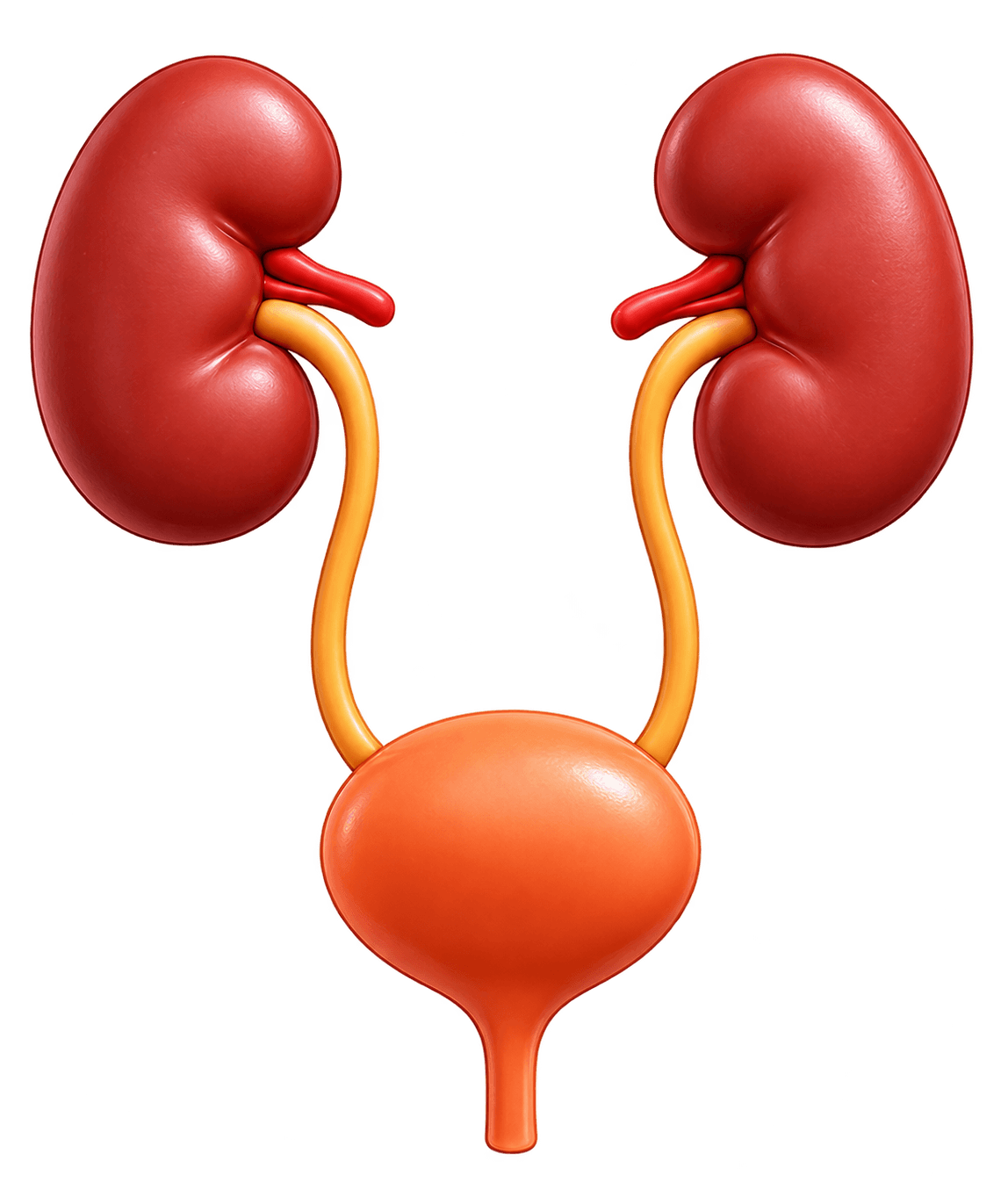
- Imaging of the kidneys, ureters and bladder to locate the stone and check for obstruction
- Analysis of a passed or retrieved stone, which guides prevention
Treatment
Determined almost entirely by size, position and whether the kidney is obstructed.
Fluids and pain relief
For small stones likely to pass on their own, with follow-up to confirm they have.
Medication to help passage
Drugs that relax the ureter can help some stones pass more easily.
Shock wave treatment
Energy applied from outside the body to break the stone into passable fragments.
Ureteroscopy
A fine telescope passed up the urinary tract to break or retrieve the stone, with no incision.
Keyhole kidney surgery
For large stones, through a small track directly into the kidney.
Urgent drainage
Where an obstructed kidney is infected, relieving the obstruction takes priority over the stone itself.
Living with it
Prevention is where the real gain is — stones recur in a large share of people who do nothing differently.
- Drink enough water that your urine stays pale all day, and more in hot weather
- Reduce salt, including pickles, papad, namkeen and packaged food
- Moderate animal protein
- Keep normal dietary calcium — cutting calcium usually makes stones more likely, not less
- Follow advice specific to your stone type if it has been analysed
- Have periodic imaging if you form stones repeatedly
Frequently asked questions
How much water should I drink to prevent stones?
Enough that your urine stays consistently pale straw-coloured — for most adults roughly two and a half to three litres a day, and more in Faridabad's summer or if you work outdoors. Judge it by the colour of your urine rather than by counting glasses.
Should I avoid calcium if I get kidney stones?
No — and this is a common and counterproductive mistake. Reducing dietary calcium usually increases the risk of calcium oxalate stones, because calcium binds oxalate in the gut and stops it reaching the urine. Reduce salt and stay well hydrated instead, and take calcium supplements only if a doctor has advised them.
Does milk or tomato cause kidney stones?
No. Normal dietary calcium including milk is protective rather than harmful. Certain high-oxalate foods matter for people who specifically form calcium oxalate stones — but broad elimination of ordinary foods is rarely the answer, and advice is much more useful once your stone type is known.
Will kidney stones come back?
They recur in a substantial proportion of people within several years — but that figure falls considerably with sustained fluid intake and dietary change. Having had one stone is a good reason to take prevention seriously rather than to assume it was bad luck.
This page is general health information, not medical advice. It cannot account for your history, medication or test results. Please speak to a qualified doctor about your own symptoms and treatment. If you think you are having a medical emergency, seek immediate help.
Need a medical evaluation?
Explore urology care at Goga Ji Hospital, Faridabad.